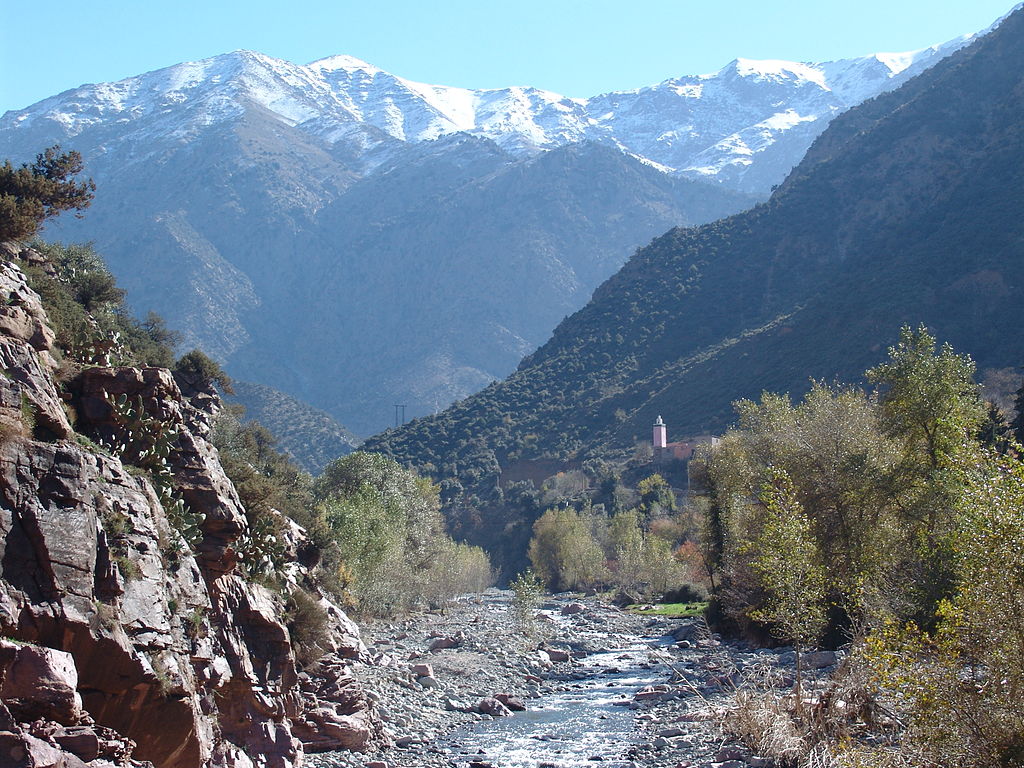
Ourika Valley and the High Atlas Mountains
Where the Mountains Breathe and Time Stands Still.
Just beyond Marrakesh’s lively markets and red walls lies another world, a landscape of mountains, rivers, and timeless traditions. The Ourika Valley, at the foot of Morocco’s High Atlas Mountains, offers a peaceful contrast to city life. The air is cooler, the scent of herbs drifts on the breeze, and the pace slows to match the rhythm of the land.
The High Atlas range, home to North Africa’s highest peak, Jebel Toubkal, rises like a stone spine across the country. For centuries, these mountains have sheltered the Amazigh people, whose language and customs are deeply connected to the valleys and rivers that sustain them. Each village tells a story written in red earth and carried by the sound of water.
The Ourika River flows through terraced fields of walnut, cherry, and almond trees. As you travel deeper into the valley, the scenery unfolds in layers of color: olive groves, red cliffs, and green gardens linked by small stone villages. Wild thyme and rosemary scent the air, eagles circle overhead, and in the high forests you might glimpse a rare Barbary macaque.
At the town of Tnin Ourika, the valley comes alive each Monday when farmers and traders gather for the weekly market. It is a vivid glimpse of local life, filled with color and conversation. Along the road, Argan oil cooperatives show how women’s collectives keep an ancient craft alive, producing one of Morocco’s most valued oils by hand.
The people of the Ourika Valley are known for their warmth. A glass of mint tea offered by a villager is more than a drink; it is an invitation to share a quiet moment. Homes built from stone and clay blend naturally into the hillsides, reflecting a way of life that remains close to nature.
The road climbs gently toward Setti Fadma, the last village before the higher peaks. Named after a local saint, it is famous for its waterfalls. The walk to the first cascade is short and refreshing, crossing small bridges and rocky paths to a cool resting place where visitors sit beside the water. Those who climb higher find quiet trails and views that stretch toward the snow-covered summits.
Each season transforms the valley. Spring brings wildflowers, summer offers cool refuge, autumn glows with golden light, and winter crowns the peaks with snow. Yet the sense of calm never fades. The connection between people and land remains as steady as the mountains themselves.
To visit the Ourika Valley is to step into Morocco’s living heritage. Stay in locally owned guesthouses, eat family-cooked meals, and support village guides and artisans. In doing so, you become part of the valley’s story, helping preserve its culture and beauty.
When you return to Marrakesh, you carry more than photographs. You bring back the stillness of the Atlas, the scent of mint and earth, and the memory of water flowing through the heart of the mountains.
Audio Preview
Introduction to Ourika Valley and the High Atlas Mountains
Route Overview
Stops on this Tour (5)
Tnin Ourika Monday Souk
Pause for just a moment. Take a breath. Now let the sound wash over you. That wall of sound, the bleating, the bargaining, the crunch of carts on packed earth, is not background noise. It is the reason this town exists. Tnin Ourika is not a town that happens to have a market. It is a market that grew a town around it. The name gives it away: in Moroccan Darija, the spoken Arabic of everyday life, tnin means Monday, and Monday is the only day that matters here. Every stall, every wall, every worn path through this place was shaped by a single weekly appointment that people in this valley have been keeping for generations.
Ourika Women's Argan Cooperative
Take a breath. There is something in the air here, faintly nutty and green, something almost like toasted grain on a warm day. That is argan oil, and it has been pressing its way into the air of this cooperative for years. You are standing inside one of the most quietly radical places in rural Morocco. Not a monument. Not a ruin. A working cooperative run entirely by Amazigh women who turned a nut into a livelihood and a craft into independence. Before you look at anything else, look at the women working at the low tables near the entrance. Everything here starts with them.
Ourika River Terrace Walk
Pause for a moment. Stop walking if you can, and close your eyes. Beneath any conversation nearby, beneath the sound of your own breathing, you can hear it: the river. The Ourika doesn't roar or thunder here, it murmurs and rushes, a constant low voice threading through everything. Open your eyes and there it is, glinting between the willows and the walnut trees, fast and cold, fed by the winter snows of the High Atlas running down toward the Haouz Plain far below. This path you are standing on follows that river, gently, unhurriedly, through some of the most carefully cultivated land in all of Morocco's mountain valleys. You don't need to rush. The river isn't going anywhere. And neither, for a little while, are you.
Setti Fatma Village Centre
You have reached the end of the road. Not just a figure of speech. The tarmac actually stops here, the valley walls close in on either side, and beyond this point, the only paths forward are trails worn smooth by generations of feet and hooves. Setti Fadma village sits at the upper edge of the Ourika Valley, where the river narrows, the air sharpens, and the mountains stop being a backdrop and become the entire world. Stand still for a moment and listen. You might hear the rush of water somewhere below you, the bells of a mule train moving through the village, the scrape of metal chairs on a café terrace, and the casual conversation of people who are not in any particular hurry. This is the place where travelers have always paused: where the cultivated valley gives way to pure mountain, and where a village has held its ground precisely at that boundary for centuries. Everything that makes this stop worth knowing begins right here, at the edge.
Setti Fatma First Waterfall
Listen. Before you even see it, you can hear it. That low, constant rush of water over stone, growing louder with every step you take up this rocky path. You have just arrived at the first waterfall above Setti Fadma village, and the sound tells you these mountains are not a backdrop. They are a living engine, shaping the air, the rock, and the water that hits your ears right now. The meltwater streaming over that ledge ahead of you has been working its way down from peaks that sit above three thousand metres, cutting and shaping this gorge for thousands of years. Take a breath. The air is cooler here, noticeably so, and it carries the faint mineral smell of wet rock. This is where the mountains stop being scenery and start being something you feel in your chest.
Start this Journey
Download the Morocco Audio Tours Offline app to unlock the full audio guide, offline maps, and GPS navigation for this tour.