Dishes
Insights
ListenAudio Preview
From the spice-scented markets of Marrakech to the coastal breeze of Essaouira, Morocco’s cuisine tells the story of a country that has always been at a crossroads — between Africa and Europe, the desert and the sea, the past and the present. Each dish is more than a recipe; it’s a living archive of migration, trade, and homegrown tradition. To taste Moroccan food is to trace the footprints of the Amazigh, Arab, Andalusian, and Sub-Saharan cultures that have shaped the nation for over a thousand years.
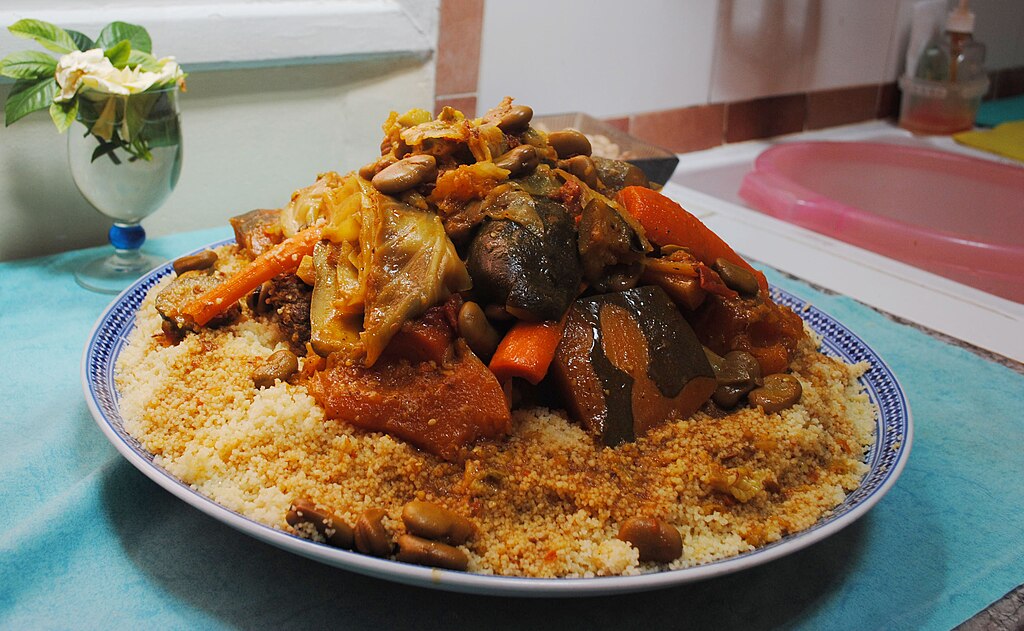
Imagine beginning your culinary journey with a plate of couscous, the humble yet noble grain that sits at the center of Moroccan life. Its fine semolina pearls, steamed patiently over spiced broth, have nourished generations and still gather families around one bowl every Friday. From there, the road leads to the rich depths of the tagine, the clay pot that transforms simple ingredients into tender, aromatic stews — a slow rhythm that mirrors the Moroccan way of savoring time.
But Moroccan cuisine refuses to be confined to the kitchen. In Marrakech, the legendary tangia simmers in the warm ashes of a hammam, tended by men as a weekend ritual. Along the coast, fishermen prepare fish chermoula, brushing their catch with herbs and lemon before grilling it over open coals. In the Atlas Mountains, travelers wake to the scent of mint tea and Berber omelette, cooked in small earthen pots beside crackling fires. Every region adds its own dialect to the national language of food.
The heart of this journey lies in how Moroccans eat — together. Meals are acts of community. The wide, shallow platter known as the gassaa is built for sharing, and even street food carries that same spirit. Brochettes are passed from hand to hand, msemen is torn and dipped communally, and harira brings families together each evening during Ramadan. Food here is both sustenance and social fabric, a daily ritual of connection and hospitality.
The ingredients themselves are storytellers. Saffron from Taliouine, olive oil from the groves of Meknes, and the ancient grains of the Middle Atlas carry the flavor of their landscapes. Every spice has a story — cumin for warmth, coriander for brightness, cinnamon for balance — and together they paint a map of Morocco’s history of trade and exchange. From bustling souks to mountain markets, ingredients travel along old caravan routes, echoing centuries of movement and encounter.
Yet Moroccan cuisine is not frozen in time. Contemporary chefs reinterpret these classics with creativity and respect, combining local produce with new techniques. Women’s cooperatives are reviving ancestral methods of hand-rolling couscous and pressing argan oil, ensuring that tradition remains alive through modern livelihoods. What was once confined to family kitchens now appears on global tables, inviting the world to experience Morocco’s generosity of flavor and spirit.
This collection is your guide through that landscape. Each dish reveals a facet of Morocco’s identity — its ingenuity, resilience, and joy in sharing. Whether you’re wandering the medina, tasting street food hot off the grill, or sitting at a family table in the countryside, you’re participating in a story that’s still being written with every meal.
Welcome to Morocco’s kitchen, where every bite is a bridge between history and hospitality, and every flavor carries the warmth of people.
Web Preview
Unlock Full Insight
Download the app to access the complete article, extended audio, and related local tips.
Get the App
COMPATIBLE WITH
iOS 15+ • Android 10+